
Why we don’t do hotels
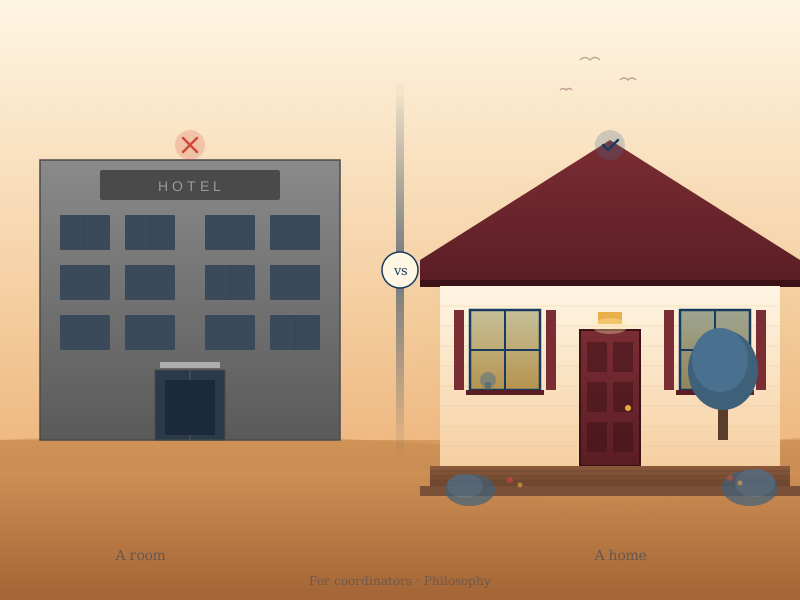
Why we don’t do hotels.
The whole-home philosophy behind every RoGi Properties placement, and why displaced families deserve more than a room with a mini-fridge.
When a family loses their home to a fire, a flood, or a storm, the last thing they need is a hotel room with two double beds and a mini-fridge. They need a place to breathe. A place to cook dinner for their kids, let the dog out, start a load of laundry, and close a door that belongs to an entire house, not a hallway. That’s why every placement we manage is a whole home. Not a suite. Not a studio. A house.
A hotel is a room. A home is a life.
Hotels are designed for travelers. Businesspeople passing through town. Tourists who need a bed between sightseeing. They are not designed for a family of four whose house just burned down and who will be displaced for six weeks, or six months.
A hotel room is 300 square feet of someone else’s space. The walls are thin. The hallway never sleeps. You eat takeout on the edge of a bed because there’s no kitchen table. The kids share a pullout sofa. The dog, if the hotel even allows dogs, has nowhere to go. You start every morning reminding yourself this is temporary, and every evening wondering how much longer you can do this.
A home changes that equation entirely. A kitchen means real meals. A yard means the dog isn’t pacing a hotel hallway. A washer and dryer mean you’re not hauling laundry bags to a shared room on the third floor. Separate bedrooms mean the kids have a door that closes, a space that’s theirs. And the front door opens onto a porch, not a corridor with forty identical doors.
What a whole home changes
Kitchen
Hotel: a microwave and a mini-fridge. Home: a full kitchen with cookware, utensils, coffee maker, dishwasher, and room to actually cook a meal for your family.
Laundry
Hotel: a shared laundry room on another floor, if it exists at all. Home: a private washer and dryer, steps from the bedroom, with detergent already stocked.
Space
Hotel: 300 sq ft for an entire family. Home: 1,200+ sq ft with separate bedrooms, a living room, and a yard. Room to spread out and still feel human.
Privacy
Hotel: housekeeping knocking daily, thin walls, strangers in the hall. Home: yours. We don’t enter without notice. No one knocks unless you invited them.
For kids especially
Adults can white-knuckle a hotel stay. Kids can’t. They need a bedroom door that closes. They need a yard, or at least a patio, where they can go outside without a parent supervising a parking lot. They need a kitchen table for homework, not the desk wedged between the TV and the curtain. They need a living room where they can sit on a couch and watch a movie and feel, for a couple of hours, like things are almost normal.
Displacement is hardest on kids because they have the least control. A whole home doesn’t fix what happened. But it gives them something a hotel room never can: a space that feels like theirs. A routine that’s closer to the one they lost. Cereal in the morning at a real table. A door they can close when they need to be alone.
The cost question
Let’s address it honestly: whole-home rentals aren’t always cheaper than hotels on a per-night basis. For a two-night business trip, a hotel makes perfect sense. But insurance displacement isn’t a two-night stay. It’s weeks. Often months.
For stays longer than a week, furnished whole-home rentals are often comparable to hotel rates, and sometimes lower, especially when you factor in what a family spends on restaurant meals because the hotel has no kitchen. The quality-of-life difference is not marginal. It is dramatic.
Most insurance carriers already have Additional Living Expense (ALE) budgets that cover furnished rentals. Adjusters and housing coordinators who work with us regularly tell us the same thing: placing a family in a home instead of a hotel leads to fewer complaints, smoother claims, and families who feel taken care of rather than warehoused.
Good to know
This is a home, not a hotel.
No front desk, no daily housekeeping, no room service. You’re renting an entire private home. We handle everything before you arrive and are a text away if you need us, but during your stay, the house is yours.
We chose the whole-home model because we believe displacement doesn’t have to mean downgrade. A family that lost their house to a kitchen fire shouldn’t spend the next two months eating microwaved meals on a hotel bedspread. They should have a kitchen. They should have a yard. They should have a home.
Displacement is temporary. But the weeks matter. And weeks in a hotel room feel very different from weeks in a home. House rule, RoGi Properties